TURKISH AIRLINES
THE WORLD’S MEETING POINT: ISTANBUL AIRPORT
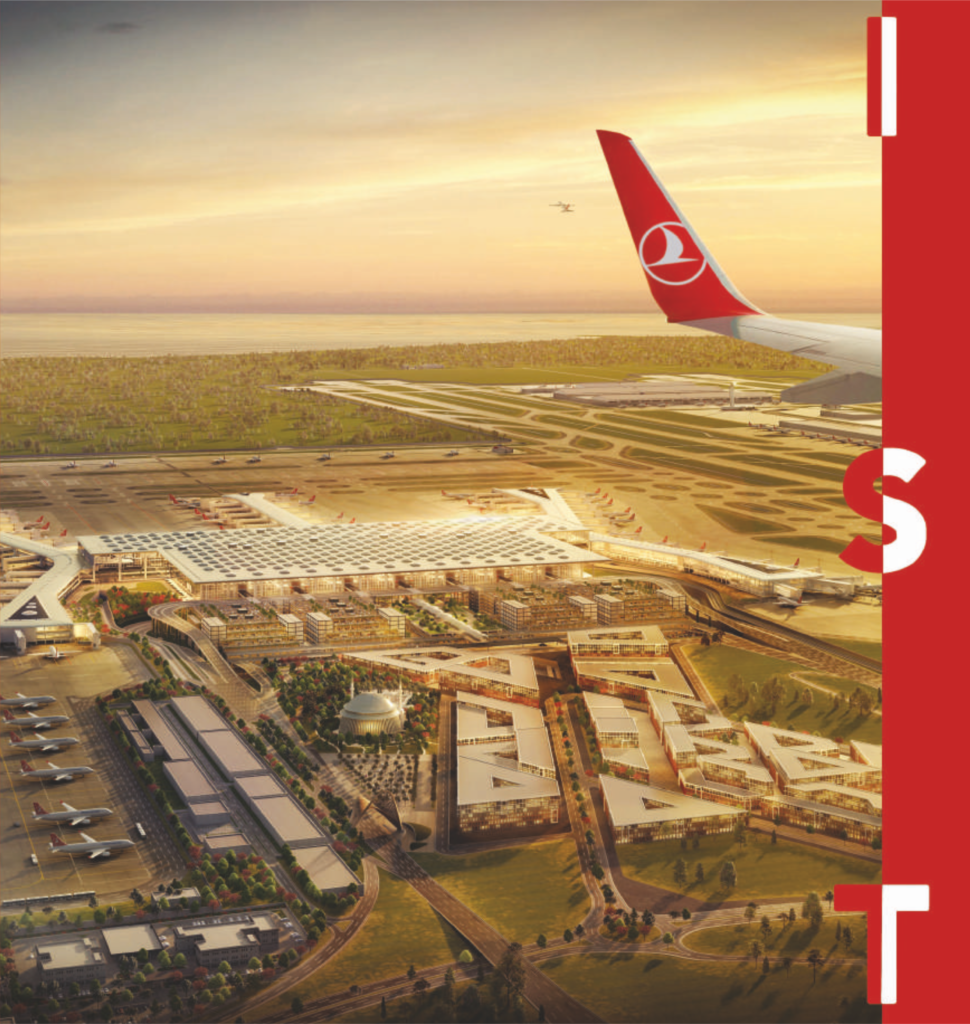
Istanbul Airport was inaugurated on 29 October 2018 in its first phase that will accommodate up to 90 million travellers annually. It will have an overall capacity of 200 million when all phases are completed within a few years. Due to its strategic location between Europe and Asia, Istanbul Airport will serve more than 350 destinations. As this new center of aviation provides an unprecedented travel experience for those visiting Istanbul with Turkish Airlines, the national flag carrier, having successfully completed its ‘Grand Migration’ to Istanbul Airport last April, launched a new era at its brand new home, a “Monument of Victory”.
Construction and Design
Impressive growth over the past 15 years by Turkish Airlines meant that Atatürk Airport, the former primary hub of Turkish Airlines, was pushed beyond its physical capabilities and capacity. As the carrier that flies to more countries and international destinations than any other airline, a new home was needed that will support the airline’s development with increased capacity and capabilities. With the support of President Recep Tayyip Erdoğan, the Ministry of Transport and Infrastructure, IGA consortium and business partners, the idea of Istanbul Airport was born.
The biggest construction project in the history of the Republic of Turkey started in May 2015. The airport terminal is 1.4 million square meters in size, which is the world’s largest and houses more than 500 check in desks. Upon completion of the final phase in the coming years, the airport will have an annual capacity of up to 200 million passengers and will employ up to 225,000 people.
As Europe’s largest transit hub, the 76 square-kilometer land area will cover six times the size of Atatürk Airport and will include six runways and 500 aircraft parking positions. The World’s largest Duty Free shop, currently already 55,000 square meters in size, will host over 400 domestic and foreign brands. The site will also hold Europe’s largest parking lot, able to park approximately 70,000 vehicles.
Upon completion of the final phase, the largest international flight hub will incorporate offices, residences, hotels, a health center, culture and art buildings, a shopping mall, designer outlets, an EXPO convention centre, and meeting and training facilities on site.
A modern, disability friendly, “green” airport with high recycling and rainwater utilization capacity, all constructed facilities built at Istanbul Airport will have Green Building Certification (LEED).
The Grand Migration
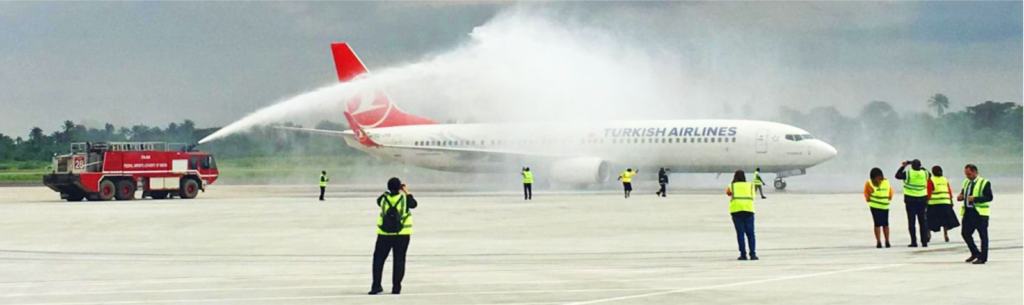
Atatürk Airport, after 86 years of serving as the home of Turkish Airlines, waved goodbye to its last passenger flight at 02:00 on April 6 with flight TK54 Istanbul – Singapore being the last ever commercial passenger flight to depart Atatürk Airport. The ”Grand Migration” from Atatürk Airport to Istanbul Airport was completed in a 29 hour period, 16 hours earlier than the allotted 45 hour period. Turkish Airlines’ Grand Migration was a monumental operation and the largest ever airport transfer in which over 10 thousand pieces of equipment were transfered on approximately 1,000 truck-loads. The first flight from Turkish Airlines’ new home at Istanbul Airport departed for Ankara Esenboğa Airport at 14:00 on April 6. Atatürk Airport’s IST code was transferred to Istanbul Airport while Atatürk Airport, which now hosts only cargo and VIP passenger flights, was assigned a new code, ISL.
A new era for Turkish Airlines
The opening of Istanbul New Airport, which combined with the dynamism and energy of Turkish Airlines, ushered in a new era for the carrier. As having the numerous advantages and capabilities of its uber-efficient home base, Turkish Airlines now able to increase its network extension capacity and increase further opportunities for new routes and timings with more slots available, allowing growth in key regions for both passenger and cargo transportation. Passengers will benefit from a completely redefined travel experience with new lounges and a superbly laid out terminal designed from the ground up using the latest technologies and innovations. Istanbul Airport is ready to play a key role for Turkish Airlines’ future growth strategy to reach its 2023 goals to serve 120 million passengers with a fleet of over 500. Operating from Istanbul Airport that offers a seamless experience to passengers, has already started to display a positive impact -expected to reach an enormous potential soon- on the number of domestic and international-to-international passengers, who are welcomed into the city to experience the world renowned Turkish hospitality first hand.
The network currently offers more than 19,000 daily flights to over 1,300 airports in 194 countries.
Established in 1933 with a fleet of five aircraft, Turkish Airlines has grown into a leading global airline with over 300 aircraft (passenger and cargo) flying to over 300 destinations worldwide. Thanks to its extensive network and the central, strategic, unique position of its Istanbul hub, which bridges two continents, Turkish Airlines is the airline that flies to more destinations than any other airline in the world.
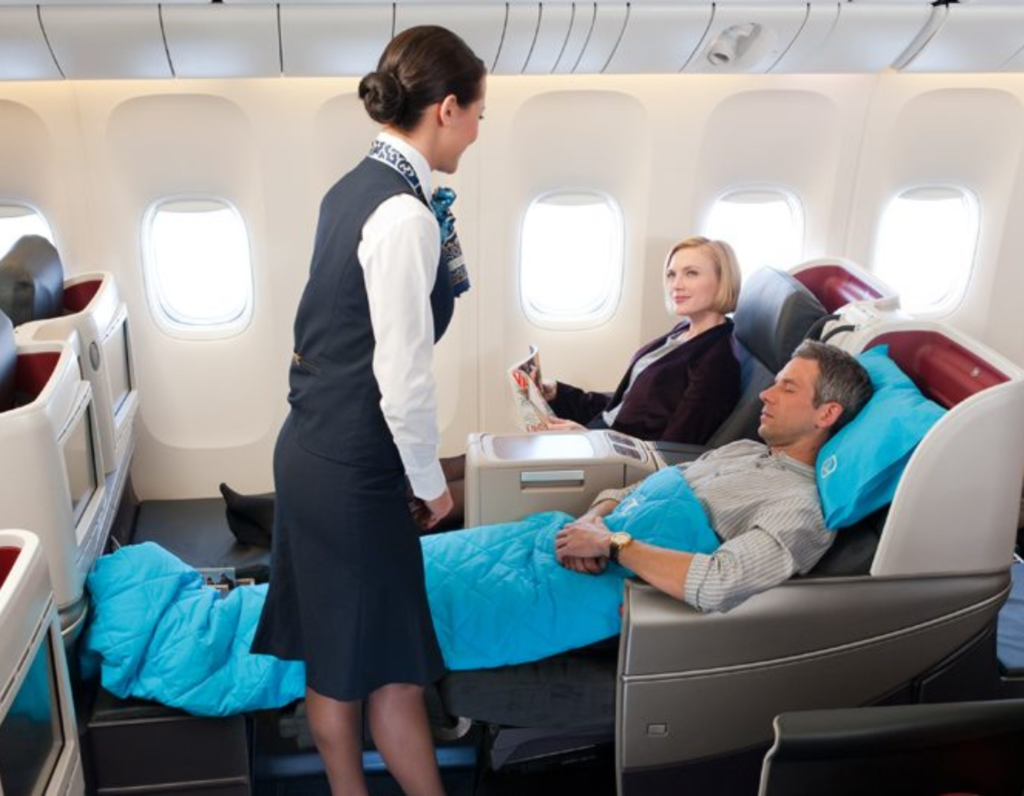
As a widely preferred global airline, Turkish Airlines delivers a delightfully different travelling experience to its guests in Economy Class and Business Class, and it is internationally recognized for its excellence in products and services offered.
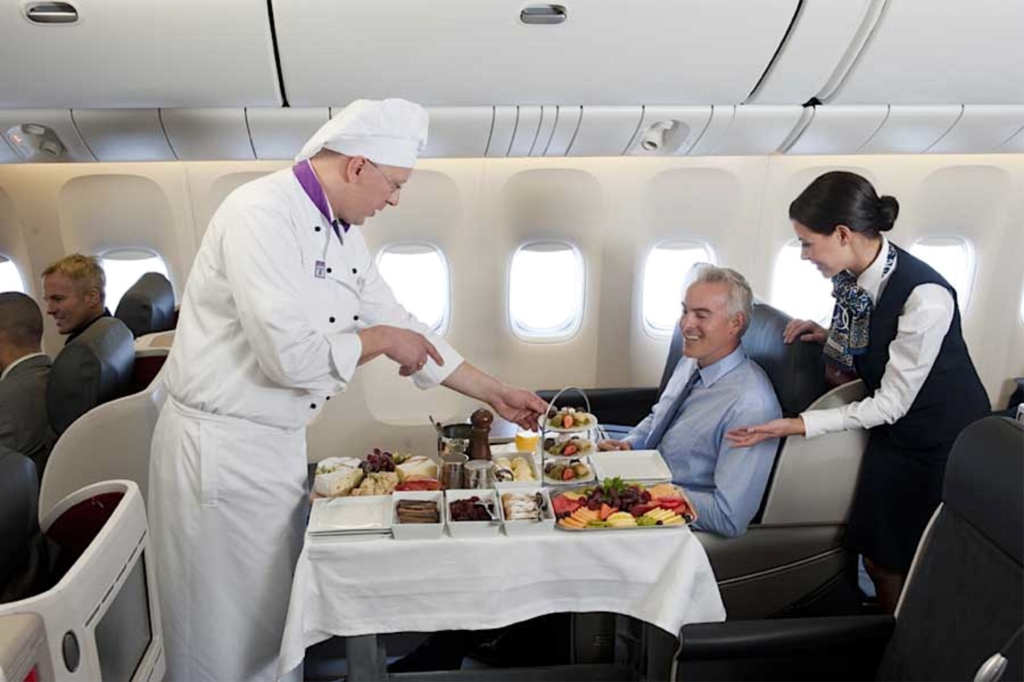
In order to keep alive its brand equity, which provides a serious advantage in terms of competition, Turkey’s national flag-carrier invests in its quality of service, in-flight entertainment systems, comfortable seats, gourmet cuisine and its employees. As one of Europe’s oldest airlines, Turkish Airlines is always at the forefront of the latest technological advances and innovations in the aviation industry and boasts one of the youngest fleets.
Turkish Airlines is also a Star Alliance member. The Star Alliance network was established in 1997 as the first truly global airline alliance to offer worldwide reach, recognition and seamless service to the international traveller.
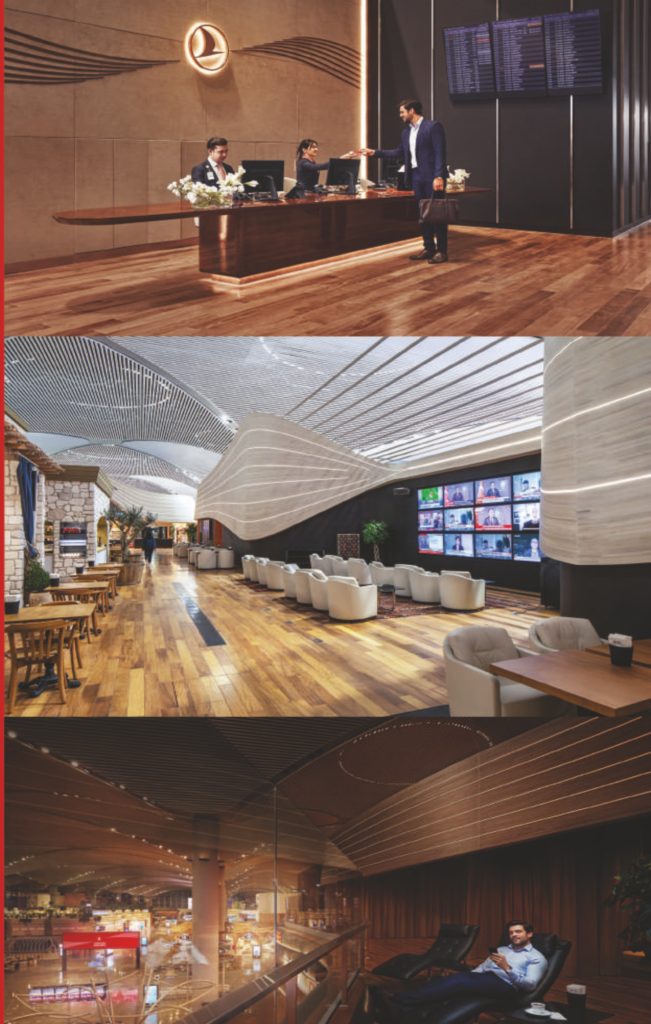
Turkish Airlines Lounge Business accommodates 765 passenger, the 5.600 m2 lounge includes a 130 m2 museum in partnership with Istanbul Modern to create a unique cultural experience as part of the flight journey. Passengers can relax in private suites and take a refreshing shower, rest in the lounge on comfortable couches and savor delicious, exclusive treats from Turkish and international cuisine. A console gaming area and large children’s play zone provide entertainment for the whole famil
Turkish Airlines Lounge Miles&Smiles has an area of 5.600 m2 and can seat up to 765 passenger. Guests can freshen up using suites and showers which a spacious children’s playground ensures all ages are entertained. For those travelling for business, six private meeting rooms are avilable for use, and a library, cinema and console gaming area provide entertainment before flights. A selection of delicious treats of Turkish and world cuisines are provided. y.
Turkish Airlines Lounge Domestic is designed with meeting rooms to let passengers make the most of their time before a flight while tasting delicious treats. Console games and a children’s playground provide fun for all the family and to ease the travel experience, passengers can complete check-in procedures and transfer directly to aircraft on apron buses.
2019 marks an important year for Turkish Airlines. As celebrating its 86 years in the aviation, the national flag carrier of Turkey put its signature under a landmark development in the global aviation history. With the Great Move to the İstanbul Airport from the Atatürk Airport successfully concluded, Turkish Airlines is operating from its new hub which will have a capacity for 200 million passengers per year after all phases are completed. The new airport project which is the biggest in the world, will provide Turkish Airlines a sufficient innovative space to go even further.
Turkish Airlines’ existing services are as follows:
Europe
Middle East
Far East
North and South America
Africa
Domestic
: Europe: 115 destinations in 43 Countries
: Middle East: 35 destinations in 13 countries
: Far East: 37 destinations in 22 countries
: North and South America: 17 destinations
in 8 countries
: Africa: 57 destinations in 37 countries
: Domestic: 50 destinations in Turkey